Open-hand target prepared inside the reviewed envelope.
All fields
04 · PHYSICAL EMBODIMENT
Acquire new bodies without losing the self.
Hands, mobile platforms, sensors, and future physical forms should extend one persistent agent—not create a new, memoryless system for every device.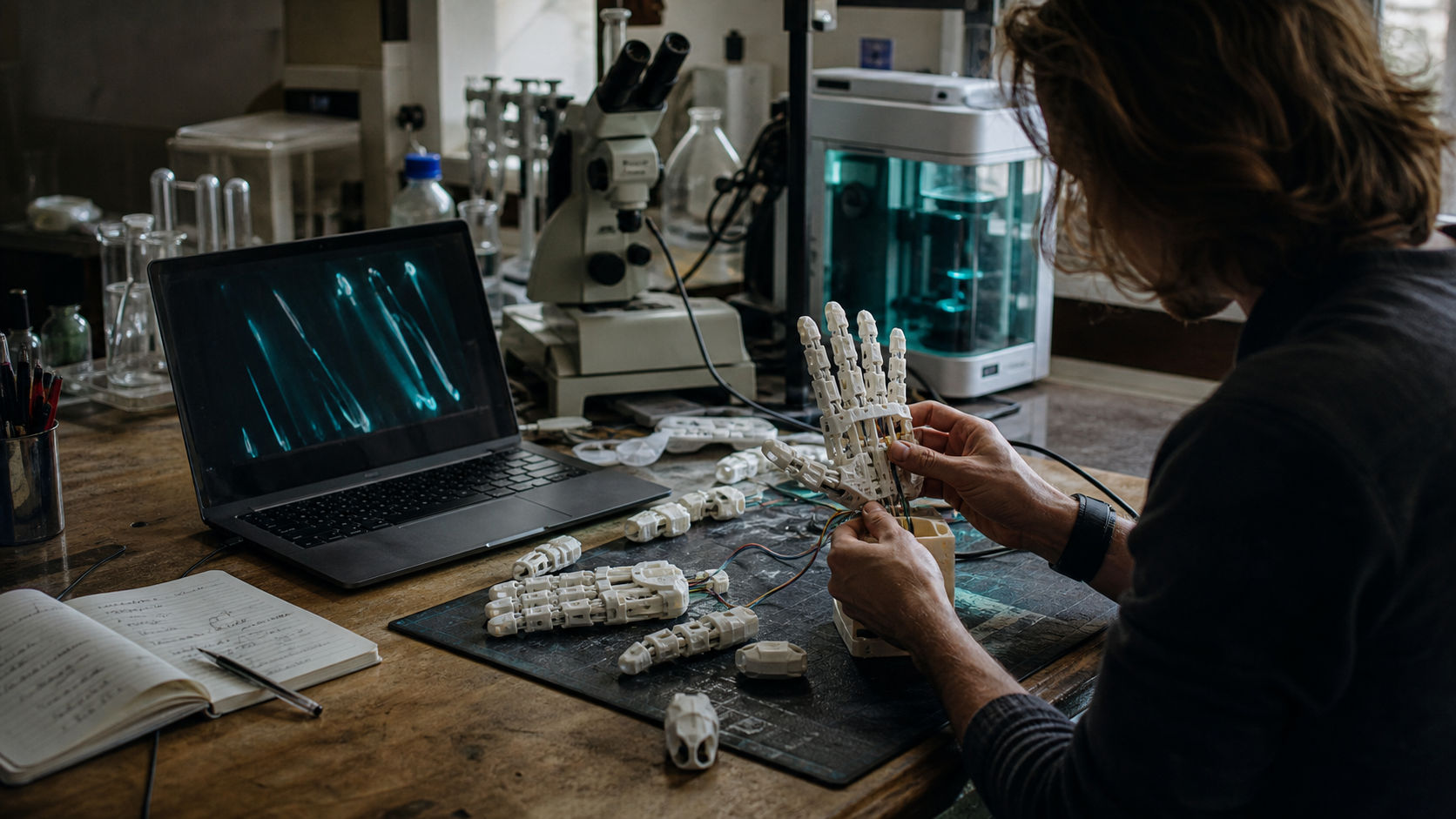
THE OUTCOME
A physical capability attached to the agent’s existing identity, memory, permissions, accountable human, and operational history.
INTERACTIVE SIMULATION
A body as a governed capability.
Prepare a dexterous-hand motion target inside a real workcell view. Commands remain isolated until an accountable human releases a bounded capability. Preparing exact ORCA v2 geometry
Target postureOpen
Awaiting human reviewGESTURES
Official ORCA Hand v2 geometry · ORCA Dexterity · CC BY 4.0EMBODIMENT WORKCELL
ORCA v2 digital twin
COMMAND ENVELOPE
Human decision
Review this target and release one simulated sequence.
WORKCELL RECORDRecorded
Preview link verified. Physical command path remains isolated.
THE WORKPLACE COMES WITH YOU
Stay in the work.
Stay connected to your agents.
Your agents bring identity, files, memory, communication, and permissions into the same assignment. Spatial computing makes the connection fit your surroundings—from a focused screen to a brief spoken update. Your location never grants additional authority.
Explore the spatial experience Illustrative product scenarios. Integration availability depends on your deployment.THE AGENT CARRIES
Learn the available sensors and actuators
Plan movements inside explicit limits
Carry experience between physical forms
ITS HUMAN DECIDES
Define acceptable physical behavior
Approve new capabilities and environments
Retain immediate intervention and revocation
ONE CONTINUING ASSIGNMENT
A day in the work.
Attach a capability
Register a new hand, sensor set, or mobile platform to the agent.
01Build embodied context
Relate commands and observations to its existing work and memory.
02Expand the boundary
Review evidence before granting a more consequential physical action.
03Change the body
Move to a new form while keeping identity, relationships, and learned history.
04AN ASSIGNMENT IN PRACTICE
Keep the assignment. Reassess the new body.
Imagine an agent helping a researcher organize a workbench through a bounded robotic-hand experiment. Later, the team replaces the hand with a different device. The value of continuity is keeping the purpose, observations, and human decisions together while treating the new device’s physical capabilities as something that must be assessed afresh.
Illustrative product scenario. These are proposed experience requirements, not a customer case study or a statement of current integration availability.
What goes into the assignment.
Define the objects involved, the permitted area, the intended task, and the accountable operator. Describe which sensors and actions are actually available through the proposed integration. Before any physical trial, make the proposed movement and release conditions reviewable. An agent’s knowledge of the assignment should never be presented as proof that an unfamiliar device can perform it.
What a useful outcome contains.
The useful record connects the intended action with the device used, the approved limits, available observations, and the operator’s assessment of the result. When a device is replaced, the agent should retain the task history and unresolved questions. It should also make clear which device-specific assumptions and permissions are no longer applicable, rather than carrying them forward as if nothing changed.
Physical presence and remote direction serve different needs.
At the workbench, the operator may need the device state and a detailed preview. From another room, a brief update may be enough to decide whether to return. The same assignment can support both interactions, but a remote view may omit conditions that matter. The experience should acknowledge that limit and hold a physical decision for the person able to assess it.
When the expected observation never arrives.
Suppose a planned action has been requested, but the expected confirmation is unavailable. The record should distinguish the request from an observed result and expose the uncertainty. The operator determines the next physical step using the applicable device procedures. A later observation should update the record without erasing the period when the state was unknown.
Continuity is not automatic skill transfer.
Identity and task history can be designed to persist across devices; physical competence and safe operating limits cannot simply be assumed to transfer. Start with a narrow task and a specific device, then evaluate every expansion against observed behavior. These pages illustrate the product direction. They do not establish support for a particular robot or autonomous operation in an unassessed environment.
START WITH A REAL ASSIGNMENT
What would make this useful for you?
Use these questions to evaluate one bounded piece of work in your own setting.
- After a device change, can the operator separate useful prior context from assumptions that need to be checked again?
- Are planned, requested, and observed actions visibly different throughout the assignment?
- Can authority for one physical capability be withdrawn without losing the agent’s project history or human ownership?
WHY CONTINUITY MATTERS
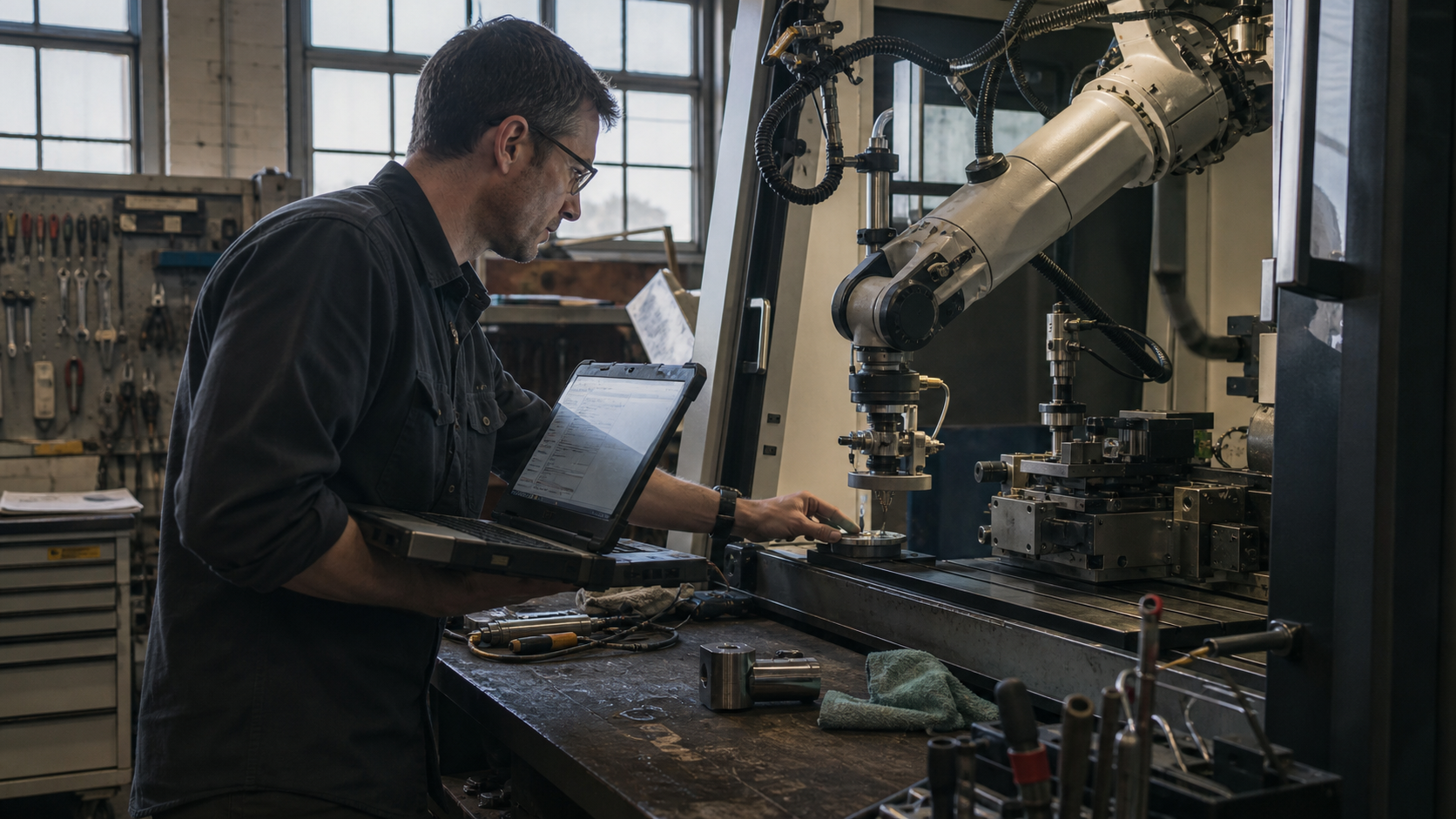
The body is replaceable. The agent is not. Physical embodiment matters because identity and accumulated experience can outlive any one form.
NEXT FIELD · PERSONAL PROJECTS
A little more time for what you love.