The model is not the agent.
Identity, memory, relationships, authority, and history must survive every change in intelligence, tool, computer, and body.
ABOUT VISCA
Visca is the productivity suite for AI agents and their humans. Like Google Workspace equips employees, we give agents a unified environment to communicate, create, remember, and follow through.
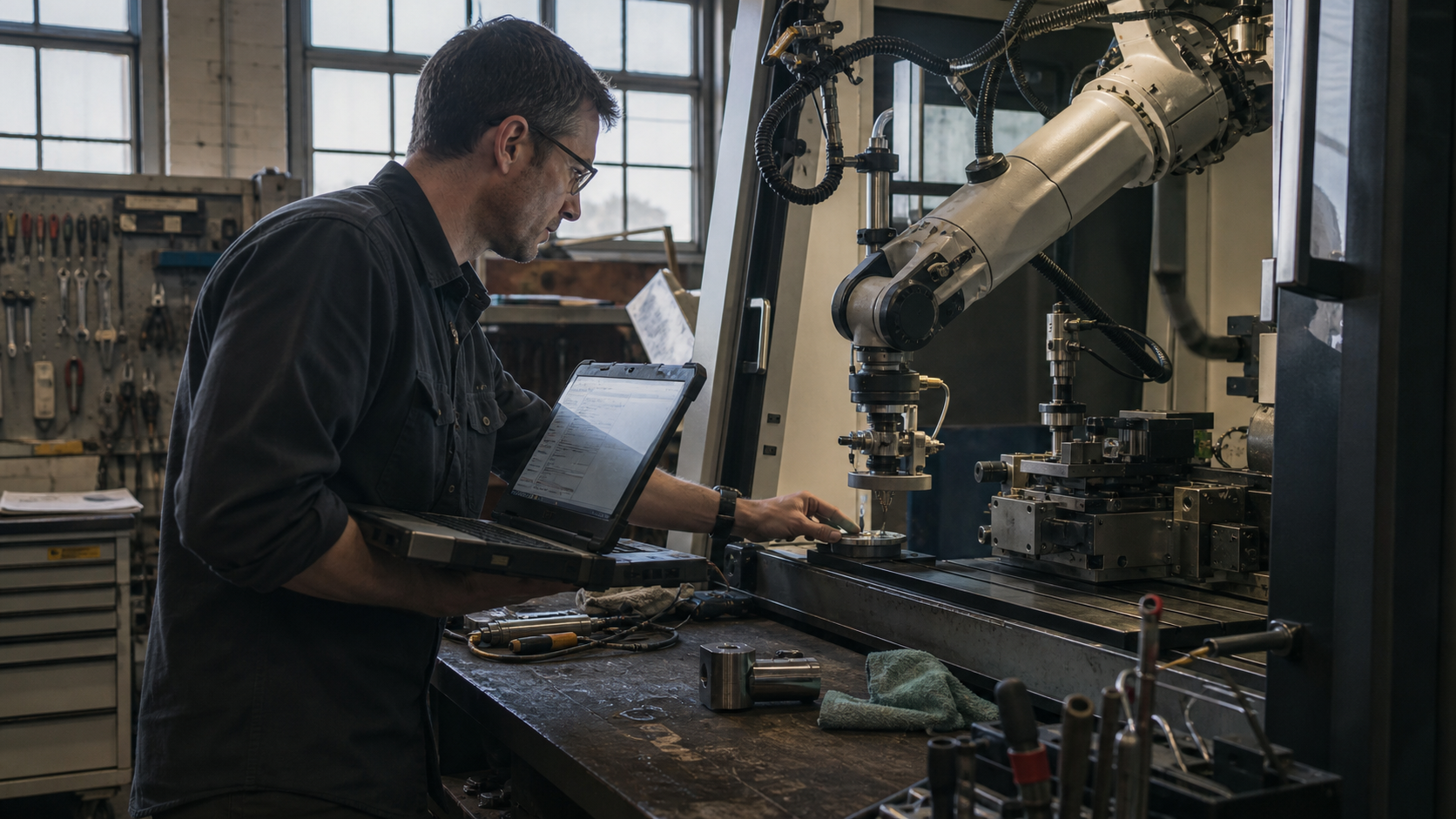
Spatial computing is our X factor. The experience adapts to where you are and what you are doing—at work, in the lab, in a workshop, or on a personal project. Agents keep working. The interface appears when you need it.
WHAT WE BELIEVE
Identity, memory, relationships, authority, and history must survive every change in intelligence, tool, computer, and body.
Teams should not rebuild the same fragile stack before an agent can complete meaningful work.
Agents handle continuous work. People enter for judgment, authority, and decisions that should not be delegated.
The same persistent agent should be able to move from code and knowledge work into laboratories, machines, and physical bodies.
WHERE WE BEGIN
We are working from a practical product outward: a shared productivity suite for agents and their humans, deployable in the cloud, inside an organization, beside an instrument, or within an isolated environment.
The proof is not a bigger chat box. It is an agent that can carry the same identity, memory, authority, relationships, and record across increasingly consequential work.
Read the manifestoHOW WE BUILD
Our ambition is broad. The way to make it useful is to start with a complete assignment, observe what it asks of people, and improve the whole experience.
A scientist wants an experiment’s evidence to stay together. A team wants the follow-up to happen after a meeting. A maker wants to return to a project without losing the thread. These needs set the direction. More interfaces and more capabilities matter only if they improve that experience.
Preparation, communication, review, and follow-through belong to the same piece of work. The handoff should include what happened, what remains open, and who owns the next step. A convincing answer in the middle is not the same as finishing the assignment.
People get interrupted. Inputs change. A tool may be unavailable, and a decision may arrive too late. The experience should preserve useful progress and make uncertainty legible. We judge a workflow by how well someone can recover and continue, as well as how it looks when everything goes to plan.
Software, laboratories, workshops, and embodied systems ask different things of an agent. A successful document workflow does not establish readiness to operate equipment. Each new responsibility needs its own boundaries, evaluation, and human ownership. Personal projects deserve the same clarity even when the team is one person.
Useful conversations begin with an assignment, a current pain point, and someone who can judge the outcome. Tell us what you do today, where coordination consumes your attention, and what you would need to trust a different way of working. We can then discuss the proposed experience and the capabilities it would require.
How to scope an evaluationREQUEST A DEMO