Why this work needs a system boundary
Shared AI work is useful only when authority, data, and consequences remain controlled.
01The operational surround is a second project
A working agent in a notebook is 20% of the work. The other 80% — identity, secrets, deploy, monitoring — is a different stack you didn't sign up to build.
02The security review arrives at the end
You build for months; then the review asks who is this agent, what can it touch, where is the record — and the framework you chose has no answers. Remediation eats the launch.
03Production becomes your pager
Once it ships, the model server, the secrets, and the pipeline need patching, rotation, and incident response — and in most teams that lands on the people who built the agent.
One shared workspace, not scattered agent threads
The collaboration and control plane around every participant, model, tool, and action.
01IdentityYour agent is a principal from day one
Identity isn't an integration you bolt on before launch. Everything you build acts as a named principal from its first run — the review's first question is answered before you start.
02CredentialsScoped access, not secrets in env vars
The agent requests scoped, time-bound credentials per action. Nothing standing to leak from a notebook, a config, or a CI log.
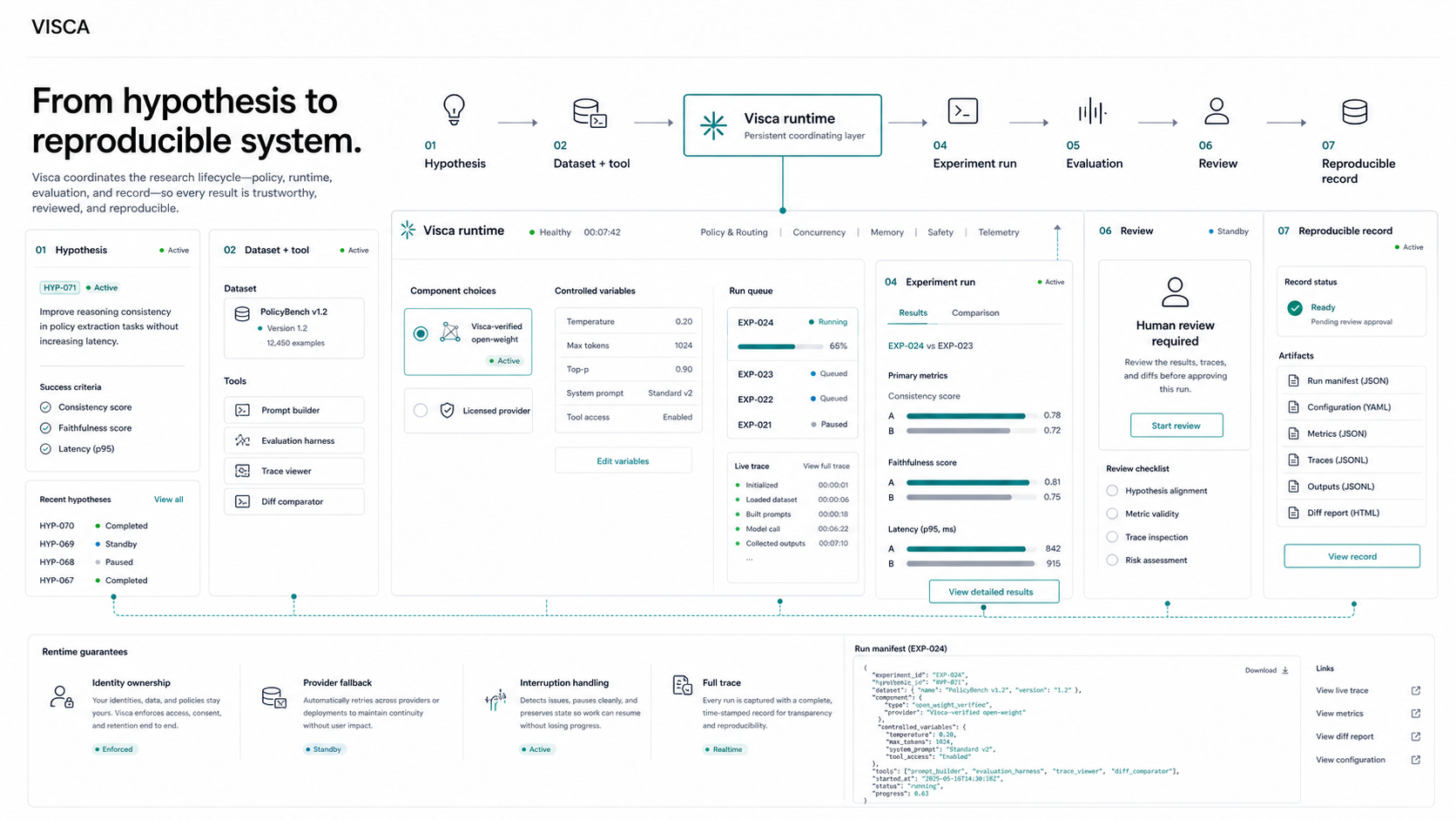
03RuntimeProduction-shaped from the start, in-perimeter
Budgets, fallback, and durable execution are handled by the runtime instead of your application code — and prompts, context, and outputs never leave the perimeter.
04AuditEvery run on the record
Every run is recorded against the agent's identity and queryable. Debugging and the security review read the same trail.
05OperatorsYou ship it; the stack runs it
The stack's own operators deploy, upgrade, patch, rotate credentials, and answer incidents. Your job narrows to three things: declare intent, sign approvals, hold the kill-switch.